Reimagining how content functioned within the growth ecosystem
Company
Focus
Project Type
My Role

Project Overview
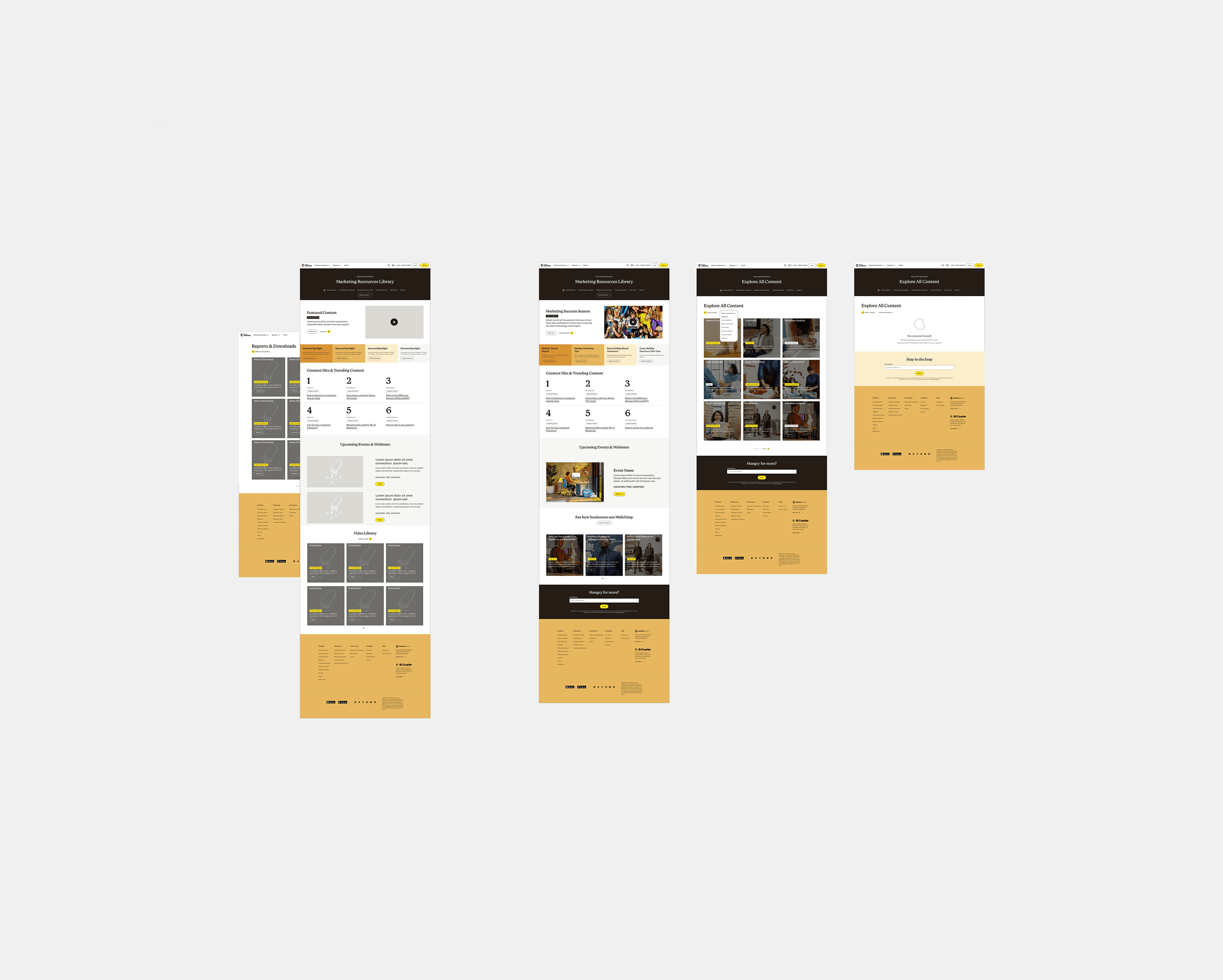
Mailchimp’s high-value marketing content was distributed across disconnected experiences, limiting its ability to drive structured engagement, first-party data collection, and mid-market pipeline growth. The opportunity was to re-architect how content functioned within the growth system.
Problem Framing
BUSINESS CONTEXT Mailchimp needed to: - Increase 1PD capture - Strengthen mid-market acquisition - Improve sales-assisted conversion - Reduce dependency on third-party data CORE GAPS - Content discoverability was fragmented - Gated assets were isolated, not embedded within a journey - There was no clear lifecycle framing for prospects - Engagement did not consistently translate into measurable pipeline impact THE OPPORTUNITY Rather than optimize individual pages, I framed an opportunity: What if content itself became a structured acquisition system? The idea: build a centralized marketing library designed around lifecycle, intent, and conversion.
Strategic Intervention
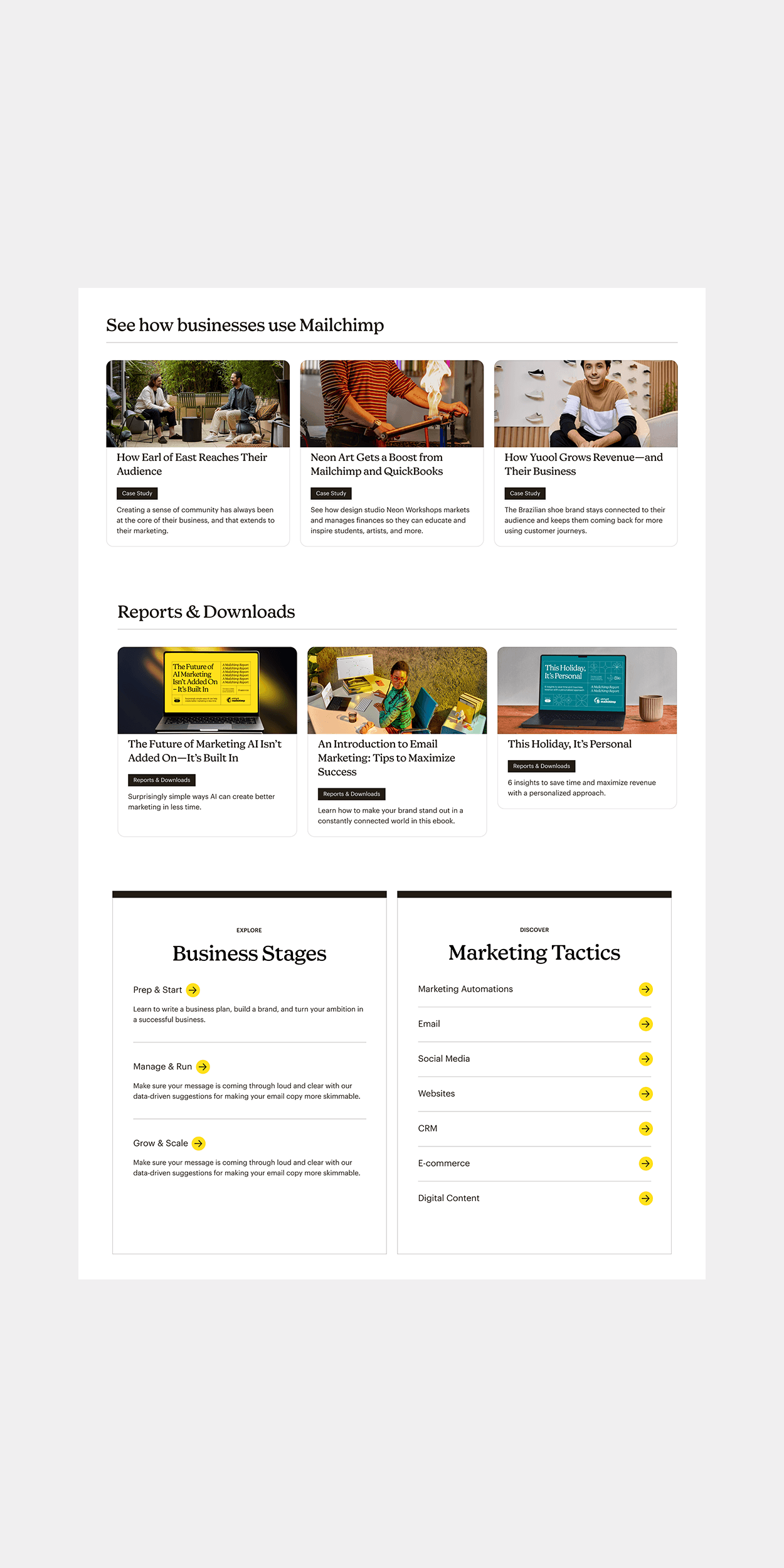
- Consolidation as growth infrastructure - Strategic gating aligned with buyer intent - Information architecture as revenue driver