How might AI reduce cognitive load and increase decision confidence in complex, high-stakes operational environments?
Problem Framing
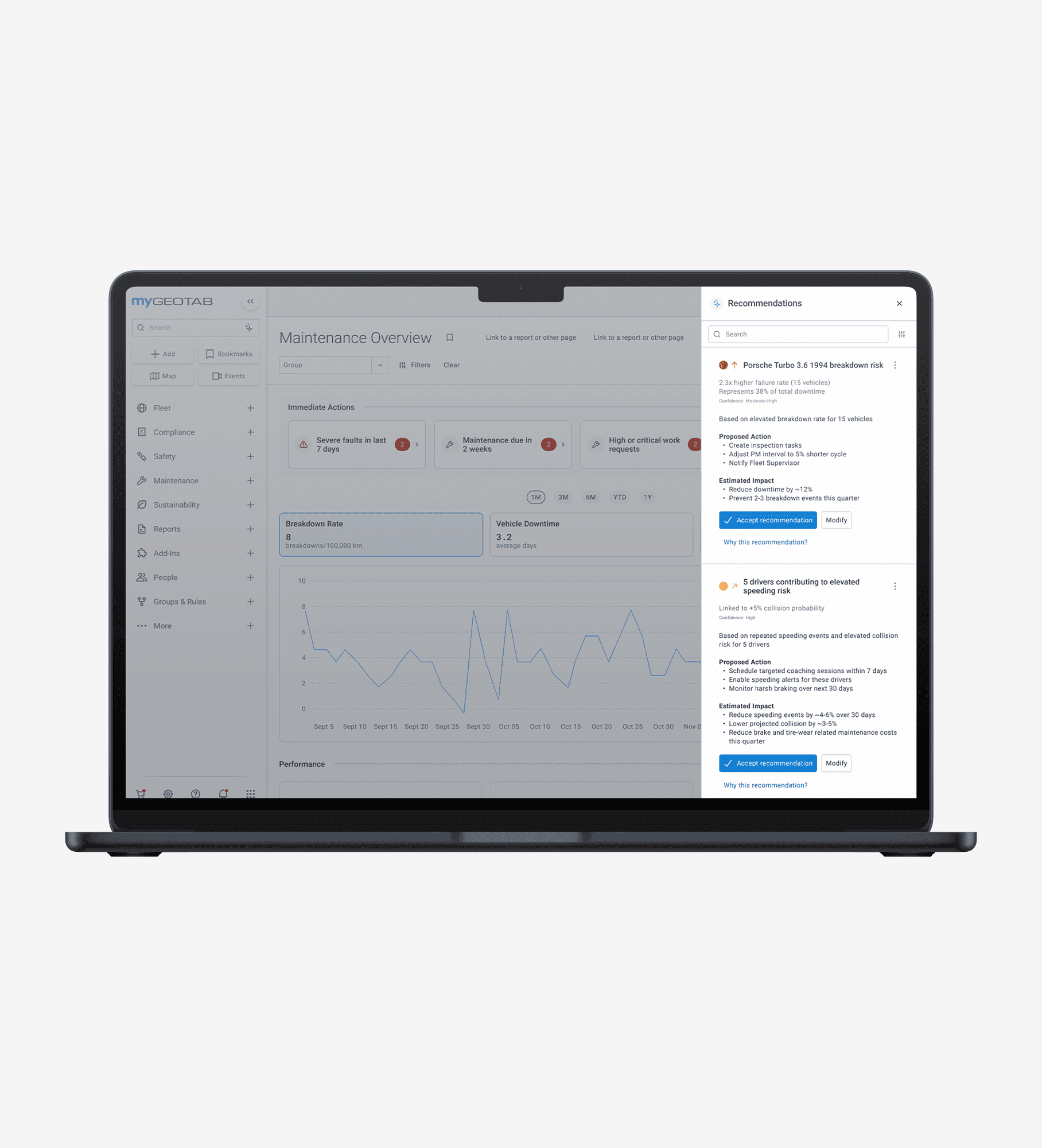
Geotab’s maintenance workflows generated high volumes of raw data, but insights were fragmented and required manual interpretation. Users were forced to scan reports and dashboards to extract operational meaning, which slowed decision-making and increased risk.
The challenge was translating complex system output into clear, actionable signals without compromising transparency or control:
- AI should augment operational judgment
- Insights must appear in-context within existing workflow
- Trust required progressive disclosure
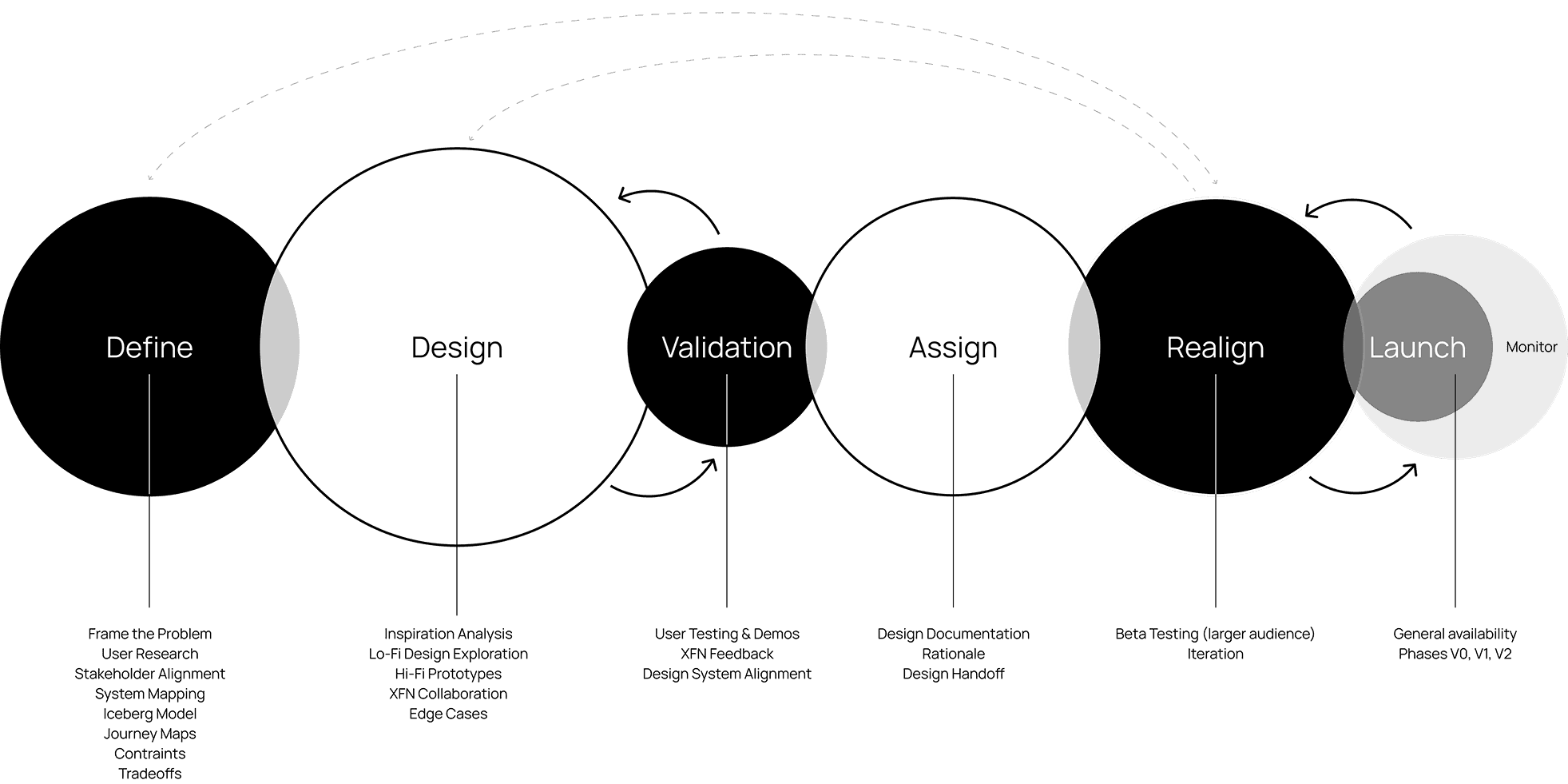
My process was grounded in systems thinking and strategic alignment. I was driven by user empathy, collaboration, and innovation.
Decision Quality Under Ambiguity
Rather than prioritizing immediate automation, I anchored designs in progressive disclosure—surfacing summaries first, then enabling deeper inspection of underlying data. This reduced cognitive load while preserving user trust in system-generated insights.
Outcomes & Impact
By embedding AI-generated summaries directly within operational workflows, we shifted the product from passive data reporting to proactive decision support.
This resulted in:
- Reduced time-to-insight for fleet and safety managers
- Higher engagement with AI-assisted features
- Clearer operational accountability through contextualization
- A reusable AI integration model adopted across adjacent features
More importantly, this project established an architectural foundation for AI augmentation across the platform — ensuring future automation capabilities could scale without compromising transparency or user trust.