Intuit Mailchimp
Resources Hub
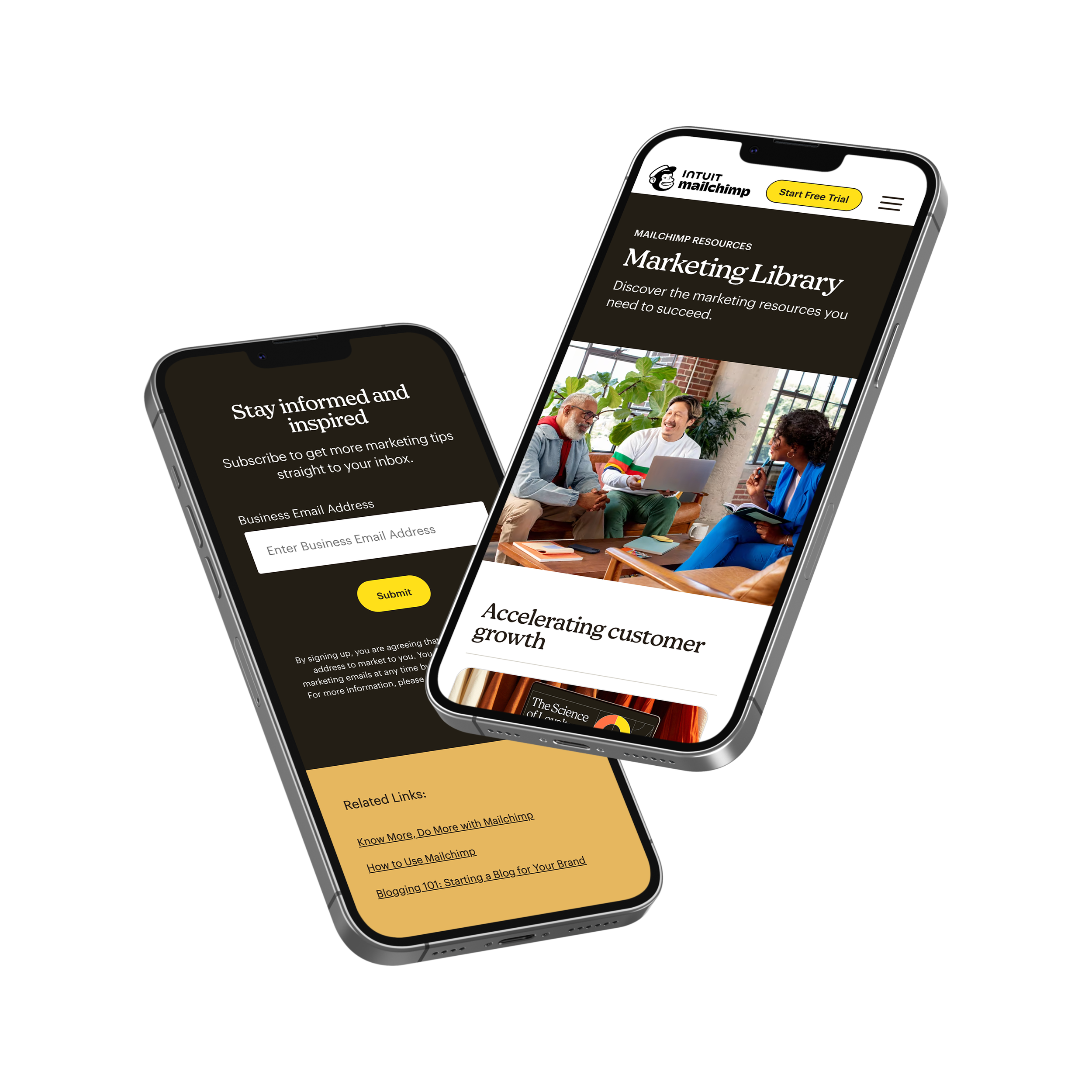
Mailchimp’s high-value marketing content was distributed across disconnected experiences, limiting its ability to drive structured engagement, first-party data collection, and mid-market pipeline growth.
The opportunity was to re-architect how content functioned within the growth ecosystem.

Scope
Testing and validation, wireframes, prototypes, design system
Team
Designer (me), 1 Copywriter, 1 Product Manager, 1 Marketing Manager, 2 developers
Timeline
~3 months
Engagement
✅ 28% increase in average engagement
✅ 42% increase in clicks to pricing
✅ 12% decrease in exit rate
Conversion
✅ 80% increase in account activations
✅ 180% increase in conversion
Top Performing Pages
Email Marketing
105% increase in engagement, 250% CTR to pricing
Analytics & Reports
290% engagement increase, 380% CTR to pricing
Automations
82% engagement increase, 128% CTR to pricing
Users discovered Mailchimp resources through blog posts, PDFs, webinars, and guides, but these experiences weren’t connected in a way that supported progression toward product adoption.
Business Context
Mailchimp needed to:
Increase 1PD capture
Strengthen mid-market acquisition
Improve sales-assisted conversion
Reduce dependency on third-party data
Core Gaps
Content discoverability was fragmented
Gated assets were isolated, not embedded within a journey
There was no clear lifecycle framing for prospects
Engagement did not consistently translate into measurable pipeline impact
The Opportunity
Rather than optimize individual pages, I framed an opportunity:
What if content itself became a structured acquisition system?
The idea: build a centralized marketing library designed around lifecycle, intent, and conversion.
Strategic Intervention
Leading this initiative, I partnered with a copywriter, product manager, marketing manager, and an engineering team to ship 0 → 1 and frame:
Consolidation as growth infrastructure
Strategic gating aligned with buyer intent
Information architecture as revenue driver
For example, high-intent assets like benchmark reports were gated to capture leads, while educational content remained open to build engagement.
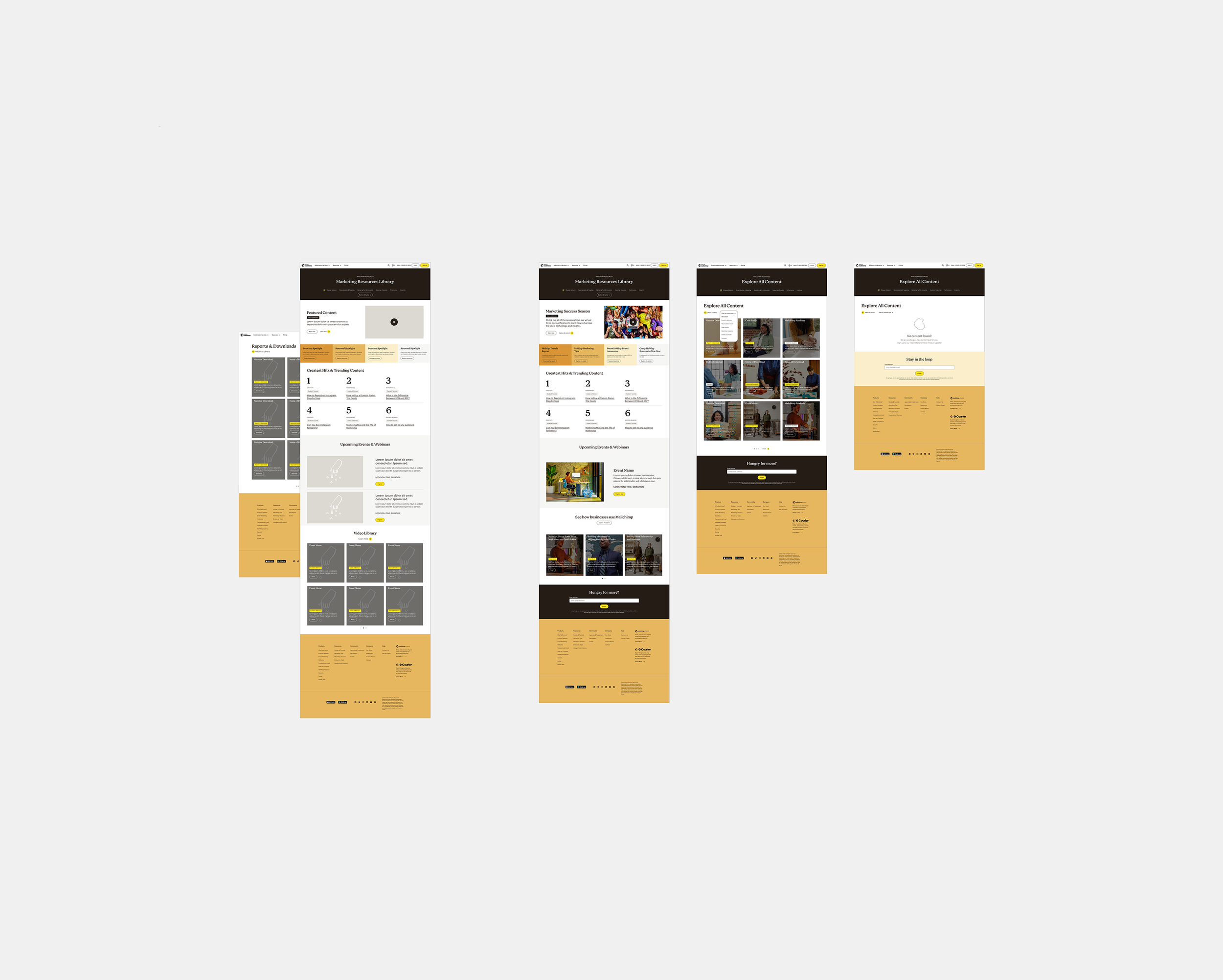
Early testing showed users struggled to understand how resources related to their stage of growth, which led me to restructure the library around business lifecycle stages rather than content categories.
Using user testing and behavioural data, I validated:
Content discoverability
Messaging clarity
Gated flow comprehension
Scroll behaviour and drop-off
Design decisions were adjusted based on:
Engagement heatmaps
Stakeholder feedback
Performance metrics post-launch
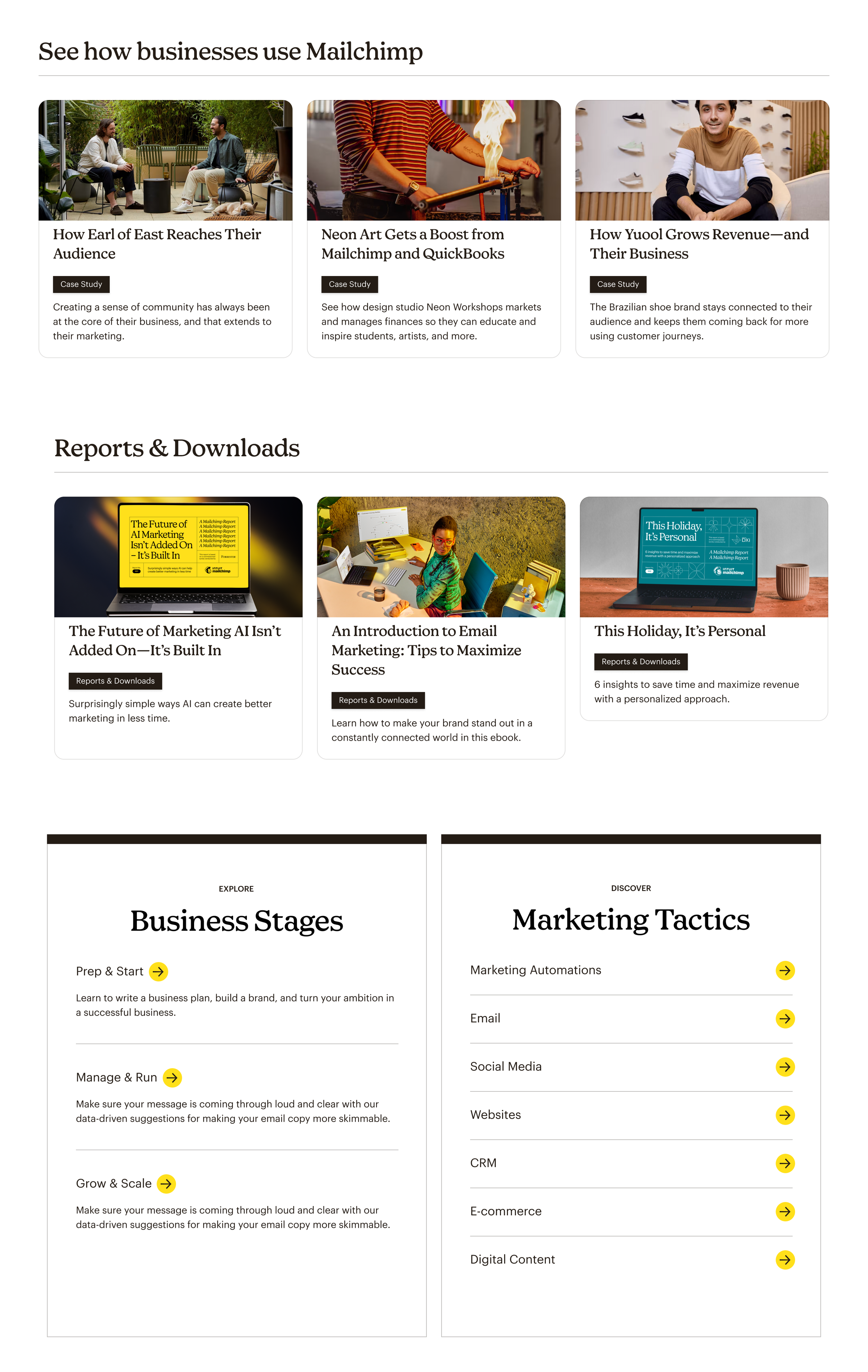
The key UX challenge was helping users understand what content was relevant without overwhelming them. Structuring the hub around lifecycle stages created a clear progression path and helped users move from learning to product adoption.
Design Exploration
Interaction Model
Lifecycle navigation
We structured content around business stages rather than categories to help users identify what to read next
Content-based gating
Gating was applied only to high-intent assets (benchmark reports) to capture leads
Embedded conversion
Email capture and product CTAs were embedded within content flows rather than isolated on landing pages.

Measurable Impact
✅ 28% increase in average engagement
✅ 42% increase in clicks to pricing
✅ 80% increase in account activations
✅ 180% increase in conversion
Beyond immediate lift, the Resources Hub established scalable infrastructure for lifecycle content strategy and first-party data collection.